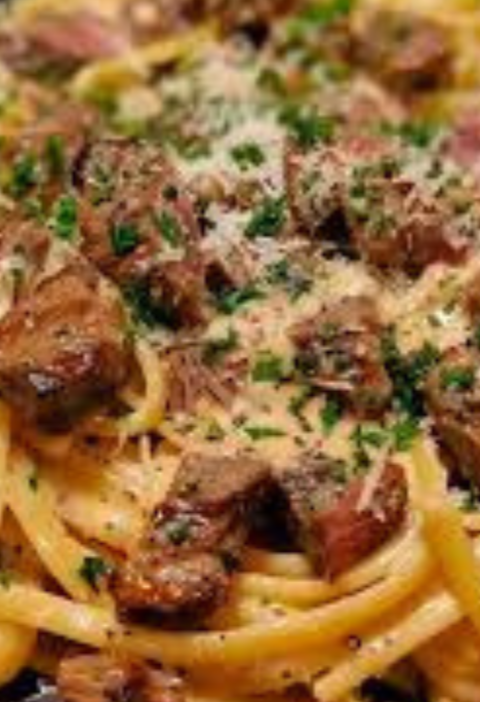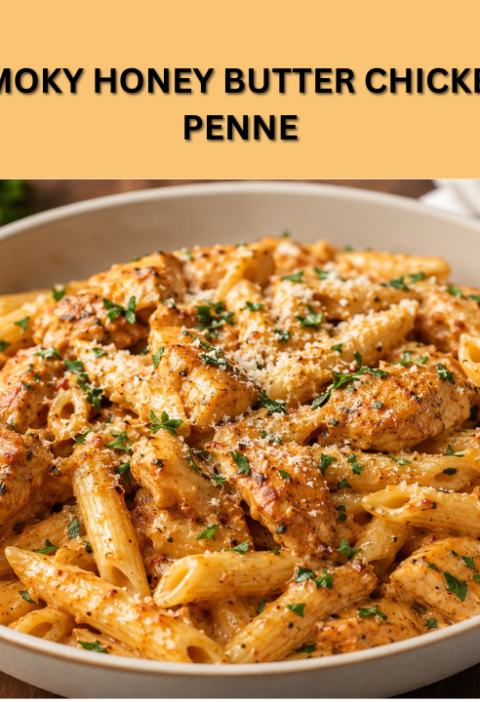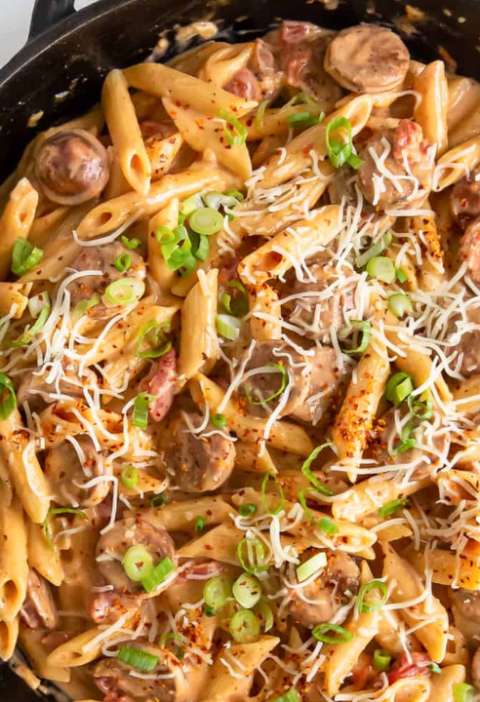
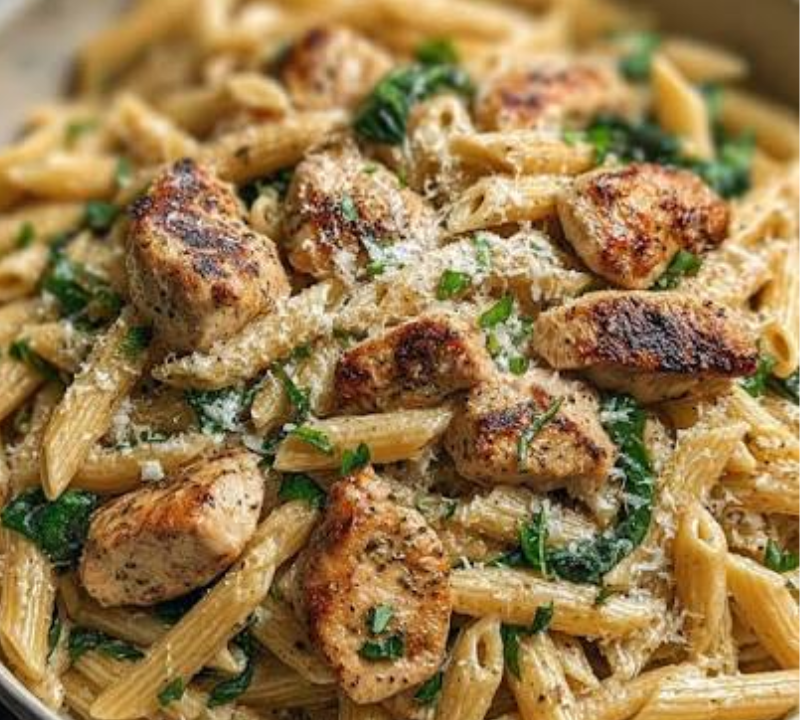
Few dinners are as satisfying as a creamy skillet pasta that combines tender chicken, plenty of garlic, Parmesan cheese, and a glossy, savory sauce. This Sticky Garlic Parmesan Chicken Skillet Pasta brings those flavors together in one pan, creating a comforting dinner without requiring complicated cooking techniques or a mountain of dishes.
The chicken is seasoned and browned until golden around the edges, giving it a delicious caramelized exterior. It’s then combined with pasta cooked in a flavorful broth, allowing every strand to absorb the savory flavors from the skillet. A mixture of butter, garlic, Parmesan, and a touch of cream transforms the cooking liquid into a rich sauce that clings beautifully to the pasta.
The word “sticky” describes the irresistible finish rather than an overly thick or gummy texture. As the sauce reduces, it coats the chicken and pasta with a glossy layer of garlic Parmesan goodness.
This recipe is especially useful on busy evenings because everything happens in one skillet. You can have a hearty homemade meal on the table in roughly 40 minutes, and the recipe is flexible enough to accommodate vegetables, different proteins, or your favorite pasta shape.
Why You’ll Love This Recipe
There are plenty of reasons to add this skillet pasta to your regular dinner rotation:
- One-pan cooking: Less cookware means easier cleanup.
- Rich garlic flavor: Fresh garlic gives the sauce an irresistible aroma.
- Tender chicken: Bite-sized pieces brown quickly and stay juicy.
- Creamy Parmesan sauce: The sauce is rich without being overly heavy.
- Weeknight friendly: Most of the preparation is straightforward.
- Customizable: Add vegetables, spice, or different cheeses.
- Family-friendly: The familiar combination of chicken, pasta, butter, and Parmesan is easy to love.
- Great leftovers: The pasta reheats well with a little extra liquid.
Ingredients
For the Chicken
- 1½ pounds boneless, skinless chicken breasts or thighs
- 1 tablespoon olive oil
- 1 teaspoon Italian seasoning
- 1 teaspoon smoked paprika
- ½ teaspoon garlic powder
- ½ teaspoon onion powder
- Salt and freshly ground black pepper
For the Skillet Pasta
- 2 tablespoons unsalted butter
- 5–6 garlic cloves, finely minced
- 1 small yellow onion, finely diced
- 12 ounces short pasta, such as penne, rigatoni, or rotini
- 3½ cups low-sodium chicken broth
- ½ cup heavy cream
- 1 teaspoon Dijon mustard
- ½ teaspoon Italian seasoning
- ½ teaspoon red pepper flakes, optional
For the Parmesan Finish
- 1 cup freshly grated Parmesan cheese
- 1 tablespoon chopped fresh parsley
- 1 teaspoon lemon juice
- Freshly cracked black pepper, to taste
Ingredient Notes
Chicken
Chicken breast is lean and cooks quickly, while boneless chicken thighs provide a richer, more succulent result. Cut the chicken into similarly sized pieces so everything cooks evenly.
Garlic
Fresh garlic is essential for the signature flavor of this dish. Mince it finely so it disperses throughout the butter and sauce.
Pasta
Short pasta shapes are particularly useful because they hold onto the creamy sauce. Penne, shells, rotini, and cavatappi are all excellent choices.
Parmesan
Freshly grated Parmesan melts more smoothly than shelf-stable grated cheese. It also provides the salty, nutty flavor that gives the sauce its character.
Chicken Broth
Low-sodium broth gives you more control over the final seasoning because Parmesan and seasoned chicken already contribute salt.
Heavy Cream
Cream adds richness and helps create a smooth sauce. You don’t need a huge quantity because the pasta starch also helps thicken the skillet sauce.
Ingredient Substitutions
This recipe can easily be adapted to suit what you have available.
Chicken
Try:
- Boneless chicken thighs
- Turkey breast
- Chicken sausage
- Shrimp
- Leftover roasted chicken
If using pre-cooked chicken, add it toward the end rather than cooking it from the beginning.
Pasta
You can substitute:
- Cavatappi
- Fusilli
- Farfalle
- Shells
- Rotini
- Rigatoni
Adjust cooking time according to the pasta package and check it frequently near the end.
Dairy
Half-and-half can replace heavy cream for a lighter sauce. Whole milk can also work, although the finished sauce will be less rich.
Parmesan
Pecorino Romano or Grana Padano can provide a similar salty, nutty character.
Garlic
For an even more intense garlic flavor, add a small amount of roasted garlic along with the fresh minced garlic.
Step-by-Step Instructions
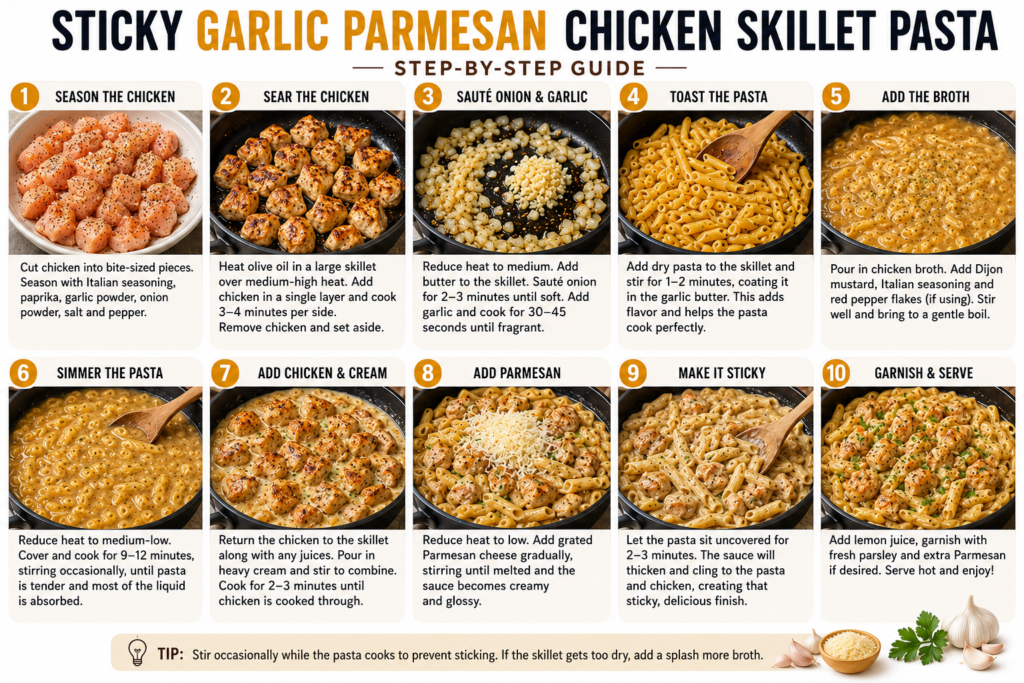
Step 1: Prepare the Chicken
Pat the chicken dry with paper towels. Cut it into bite-sized pieces.
Place the chicken in a bowl and season with Italian seasoning, smoked paprika, garlic powder, onion powder, salt, and black pepper.
Toss until every piece is evenly coated.
Step 2: Sear the Chicken
Heat olive oil in a large, deep skillet over medium-high heat.
Add the chicken in a single layer. Avoid overcrowding the pan; cook in batches if necessary.
Sear for approximately 3–4 minutes per side, or until the chicken develops a golden-brown exterior.
The chicken does not have to be completely cooked at this stage.
Transfer it to a clean plate.
Step 3: Build the Garlic Butter Base
Reduce the heat to medium.
Add butter to the same skillet.
Once melted, add the diced onion and cook for approximately 2–3 minutes until it starts to soften.
Add the minced garlic.
Cook for 30–45 seconds, stirring constantly. The garlic should smell fragrant but should not become dark brown.
Step 4: Toast the Pasta
Add the dry pasta directly to the skillet.
Stir it through the garlic butter mixture for about 1–2 minutes.
This quick step lightly toasts the pasta and gives the finished dish additional depth.
Step 5: Add the Broth
Pour the chicken broth into the skillet.
Add Dijon mustard, Italian seasoning, and red pepper flakes if using.
Stir well, scraping up any browned bits from the bottom of the pan.
Bring the liquid to a gentle boil.
Step 6: Simmer the Pasta
Reduce the heat to medium-low.
Cover the skillet and cook for approximately 9–12 minutes, stirring every few minutes.
The pasta should gradually absorb the broth while releasing starch that helps thicken the sauce.
If the skillet becomes dry before the pasta is tender, add a small splash of broth.
Step 7: Add the Chicken
Return the browned chicken and any juices from the plate to the skillet.
Pour in the heavy cream.
Stir gently and continue cooking until the pasta is tender and the chicken is fully cooked.
For food safety, chicken should reach an internal temperature of 165°F (74°C).
Step 8: Create the Parmesan Sauce
Turn the heat to low or remove the skillet from the burner.
Add the freshly grated Parmesan gradually, stirring after each addition.
The cheese should melt into the warm sauce, creating a creamy coating around the pasta and chicken.
Finish with lemon juice and freshly cracked black pepper.
Step 9: Create the “Sticky” Finish
Allow the skillet to sit uncovered for approximately 2–3 minutes.
As the sauce cools slightly and continues to thicken, it should cling to the pasta and chicken.
Don’t cook it until completely dry. The ideal consistency should be glossy, creamy, and spoonable.
Step 10: Garnish and Serve
Scatter fresh parsley over the top.
Add another sprinkle of Parmesan and a little black pepper if desired.
Serve immediately while the sauce is creamy and the chicken is hot.
Expert Tips
Don’t Crowd the Chicken
Give each piece enough space to contact the hot skillet. Crowding traps steam and makes browning more difficult.
Don’t Burn the Garlic
Garlic can turn bitter quickly. Keep the heat moderate and stir continuously once it goes into the butter.
Stir the Pasta
Because the pasta cooks directly in the skillet, occasional stirring is important to prevent it from sticking to the bottom.
Use Freshly Grated Parmesan
Pre-shredded cheese can contain additives that interfere with smooth melting. Freshly grated Parmesan gives you a silkier sauce.
Don’t Boil the Cream
Once cream is added, keep the heat moderate. Aggressive boiling can cause the sauce to become separated or overly thick.
Let the Dish Rest
A short rest allows the sauce to settle and cling to the pasta.
Taste Before Salting
Parmesan, broth, and seasoning all contain sodium, so taste the finished dish before adding extra salt.
Recipe Variations
Creamy Spinach Chicken Pasta
Add two large handfuls of fresh baby spinach during the final few minutes of cooking. Stir until wilted.
Mushroom Garlic Parmesan Pasta
Sauté sliced mushrooms after removing the chicken. Their earthy flavor works especially well with garlic and Parmesan.
Spicy Garlic Chicken Pasta
Increase the red pepper flakes or add a dash of hot sauce for extra heat.
Broccoli Chicken Parmesan Pasta
Add small broccoli florets during the last 5–6 minutes of pasta cooking. This creates a complete meal with vegetables in the same skillet.
Sun-Dried Tomato Version
Add chopped sun-dried tomatoes toward the end for a tangy, Mediterranean-style variation.
Extra-Cheesy Pasta
Add a small amount of shredded mozzarella or fontina along with the Parmesan for an even more indulgent finish.
What to Serve with Garlic Parmesan Chicken Pasta
This skillet pasta is hearty enough to serve as a complete meal, but a simple side can make dinner feel even more special.
Try it with:
- Crisp green salad
- Garlic bread
- Roasted asparagus
- Steamed broccoli
- Green beans
- Caesar salad
- Roasted zucchini
- Tomato and cucumber salad
- Crusty French bread
A fresh salad with a slightly acidic dressing is particularly good because it balances the richness of the creamy Parmesan sauce.
Storage & Reheating
Refrigerator
Allow leftovers to cool before transferring them to an airtight container.
Refrigerate for up to 4 days.
Freezer
Creamy pasta can change texture after freezing, but it can still be frozen for up to 2 months in a sealed freezer-safe container.
For the best texture, thaw it overnight in the refrigerator.
Microwave
Place a serving in a microwave-safe bowl.
Add a tablespoon or two of chicken broth, milk, or water.
Heat in short intervals, stirring between each one, until hot.
Stovetop
Place leftovers in a skillet over low heat. Add a splash of broth or milk and stir gently until the sauce becomes creamy again.
Common Mistakes to Avoid
Overcooking the Chicken
Small chicken pieces cook quickly. Remove them once browned and finish cooking them with the pasta later.
Burning the Garlic
Dark, burnt garlic can make the entire dish bitter. Keep it lightly golden and fragrant.
Using Too Little Liquid
The pasta needs enough broth to cook properly. If the skillet becomes dry before the pasta is tender, add more broth gradually.
Overcooking the Pasta
Check it several minutes before the expected cooking time. Pasta should be tender but still have a little bite.
Adding Parmesan Over High Heat
Excessive heat can make cheese clump or become greasy. Add it over low heat or after removing the skillet from the burner.
Making the Sauce Too Thick
Remember that pasta continues absorbing liquid as it rests. Keep the sauce slightly looser than your desired final consistency.
FAQs
Can I use chicken thighs?
Yes. Boneless, skinless chicken thighs are an excellent choice and tend to stay especially juicy.
Can I use pre-cooked chicken?
Absolutely. Shredded or diced rotisserie chicken can be stirred into the pasta during the final few minutes.
What pasta works best?
Penne, rotini, shells, rigatoni, and cavatappi all work well because their shapes capture the creamy sauce.
Can I make this recipe without heavy cream?
Yes. Use half-and-half or whole milk. The sauce will be somewhat lighter but still flavorful.
Can I add vegetables?
Definitely. Spinach, broccoli, mushrooms, peas, zucchini, and sun-dried tomatoes are all excellent choices.
Why did my Parmesan sauce become grainy?
The most common causes are excessive heat or adding Parmesan too quickly. Lower the heat and gradually stir in freshly grated cheese.
Can I make this gluten-free?
Yes. Use your preferred gluten-free short pasta and confirm that the chicken broth, seasonings, and other packaged ingredients are gluten-free.
Can I prepare this ahead of time?
It’s best served fresh, but leftovers are excellent for meal prep. Add a little broth or milk when reheating to restore the creamy consistency.
Nutrition Information
Approximate values per serving, based on 6 servings:
- Calories: 570
- Protein: 39g
- Carbohydrates: 48g
- Fat: 25g
- Saturated Fat: 12g
- Fiber: 3g
- Sugar: 4g
- Cholesterol: 105mg
- Sodium: 780mg
- Calcium: 25% DV
Nutrition information is an estimate and can vary depending on the specific ingredients, brands, portion sizes, and substitutions used.
Conclusion
Sticky Garlic Parmesan Chicken Skillet Pasta brings together everything you want in a comforting homemade dinner: golden chicken, tender pasta, plenty of garlic, buttery richness, and a creamy Parmesan sauce that coats every bite.
The one-skillet method makes this recipe especially practical for busy nights. Instead of boiling pasta separately and preparing another sauce in a different pan, the pasta cooks directly in the flavorful broth, absorbing the garlic and savory seasonings as it becomes tender. The result is a deeply flavorful meal with less cleanup.
For an easy weeknight dinner, serve it with a crisp salad and warm garlic bread. You can also customize the skillet with spinach, mushrooms, broccoli, sun-dried tomatoes, or a little extra spice.
Once you master the basic technique, this recipe becomes more than just one dinner—it becomes a flexible template for creating creamy, flavorful skillet pasta whenever you’re craving something comforting and homemade.