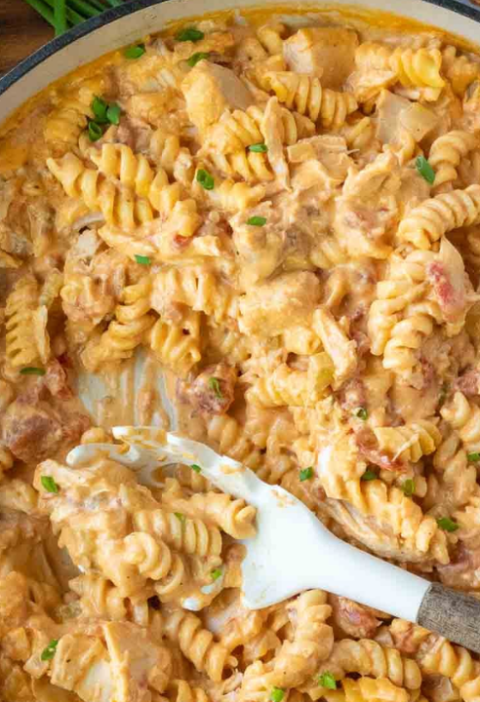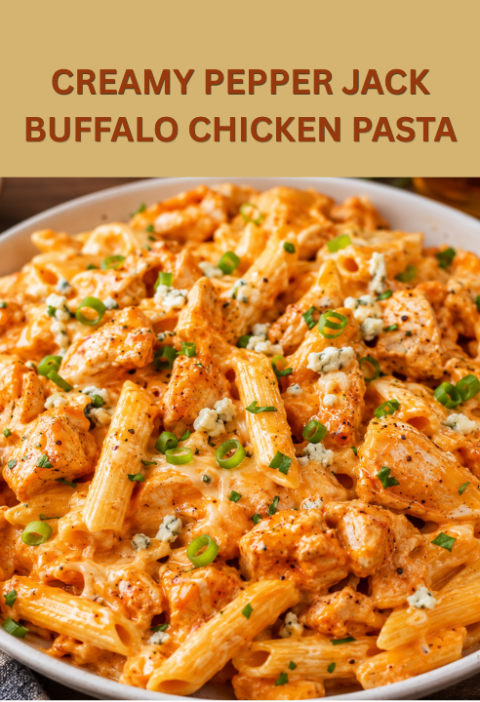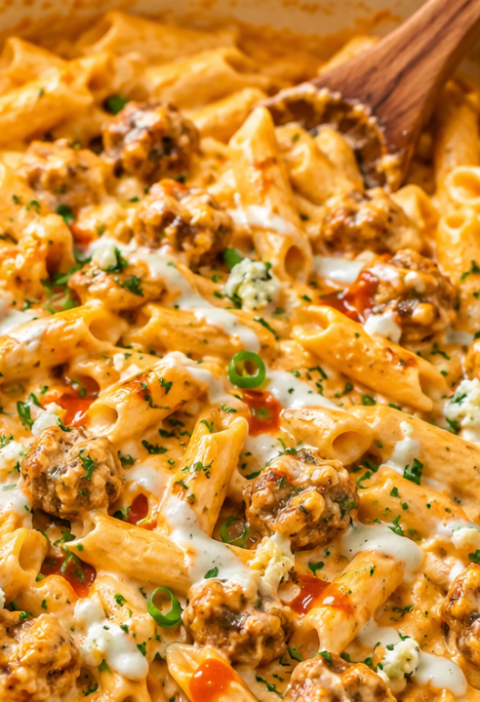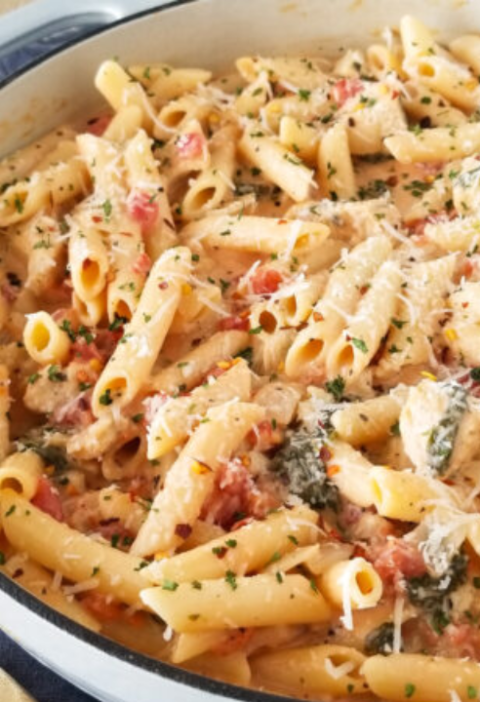
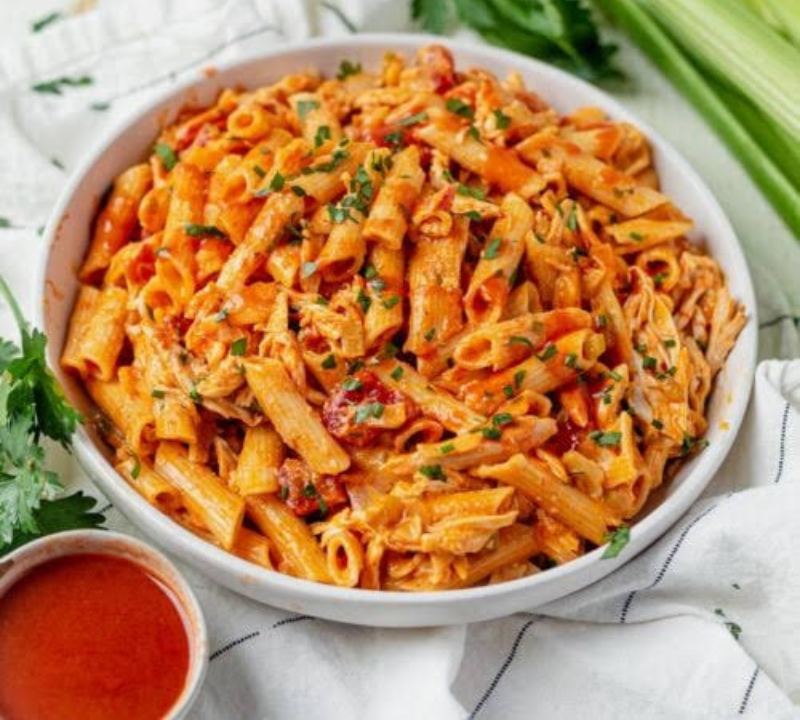
If you love the bold flavor of Buffalo chicken but want something extra comforting and easy to make, this One-Pot Creamy Buffalo Mac and Sausage is a delicious dinner to add to your rotation. It combines smoky sausage, tender macaroni, creamy cheese, and tangy Buffalo sauce in one skillet for a meal that’s rich, satisfying, and full of flavor.
Classic macaroni and cheese gets a spicy upgrade from Buffalo sauce, while sliced sausage adds a savory, smoky element that makes the dish hearty enough to serve as a complete dinner. The pasta cooks directly in the same pot as the sauce, allowing it to absorb flavor while releasing starch that helps create a creamy consistency.
There’s also no need to prepare a separate cheese sauce. Once the pasta is tender, cream cheese and shredded cheddar melt into the warm mixture to create a smooth, velvety finish. A little ranch seasoning or dressing can be added to balance the heat with cool, herby flavor.
The result is comfort food with personality. It’s creamy without being bland, spicy without necessarily being overwhelming, and easy enough for a busy weeknight.
Why You’ll Love This Recipe
This Buffalo sausage mac has several advantages that make it perfect for home cooking:
- One-pot preparation means less cleanup.
- Ready in roughly 35–40 minutes.
- Uses easy-to-find ingredients.
- Combines creamy, cheesy, spicy, and smoky flavors.
- Makes a filling family dinner.
- Easy to customize for different spice preferences.
- Works well for leftovers.
- Great for game-day gatherings and casual entertaining.
- Can be loaded with vegetables for extra nutrition.
- No separate pot of pasta or cheese sauce is necessary.
Ingredients
For the Sausage
- 14 ounces smoked sausage, sliced into rounds
- 1 tablespoon olive oil
- ½ teaspoon smoked paprika
- ½ teaspoon garlic powder
- Freshly ground black pepper
For the Pasta
- 2 tablespoons unsalted butter
- 1 small yellow onion, finely diced
- 3 garlic cloves, minced
- 2 cups elbow macaroni
- 3½ cups low-sodium chicken broth
- ¾ cup whole milk
- ½ cup Buffalo-style hot sauce
- 1 teaspoon Dijon mustard
For the Creamy Cheese Sauce
- 4 ounces cream cheese, softened
- 1½ cups freshly shredded sharp cheddar cheese
- ½ cup Monterey Jack cheese
- 1 tablespoon ranch seasoning, optional
For Garnishing
- Chopped green onions
- Fresh parsley
- Extra shredded cheddar
- Buffalo sauce
- Ranch or blue cheese dressing, optional
Ingredient Notes
Smoked Sausage
Smoked sausage gives the dish a savory, slightly smoky flavor that works particularly well with Buffalo sauce. Beef, pork, chicken, or turkey sausage can all be used.
Buffalo Sauce
Buffalo sauce provides the characteristic tangy heat. The amount can be adjusted depending on how spicy you like your mac and cheese.
Cheddar Cheese
Sharp cheddar provides a strong cheesy flavor that stands up to the Buffalo sauce. Freshly shred it from a block for the smoothest melting.
Cream Cheese
Cream cheese gives the sauce body and creates a silky texture without requiring a complicated roux.
Chicken Broth
Broth gives the pasta more flavor than plain water. Choose low-sodium broth so you can control the salt level.
Ranch Seasoning
Ranch seasoning is optional but adds a creamy, herby flavor that pairs naturally with Buffalo sauce.
Ingredient Substitutions
Sausage
You can substitute the smoked sausage with:
- Chicken sausage
- Turkey sausage
- Andouille sausage
- Italian sausage
- Ground chicken
- Ground turkey
For a vegetarian version, use sliced plant-based sausage or sautéed mushrooms.
Cheese
Try replacing cheddar with:
- Colby Jack
- Pepper Jack
- Gouda
- Monterey Jack
- Mild cheddar
For more heat, Pepper Jack is especially good.
Milk
Whole milk produces a richer sauce, but evaporated milk or half-and-half can also be used.
Pasta
Elbow macaroni is classic, but shells, cavatappi, rotini, or small penne are excellent alternatives.
Step-by-Step Instructions
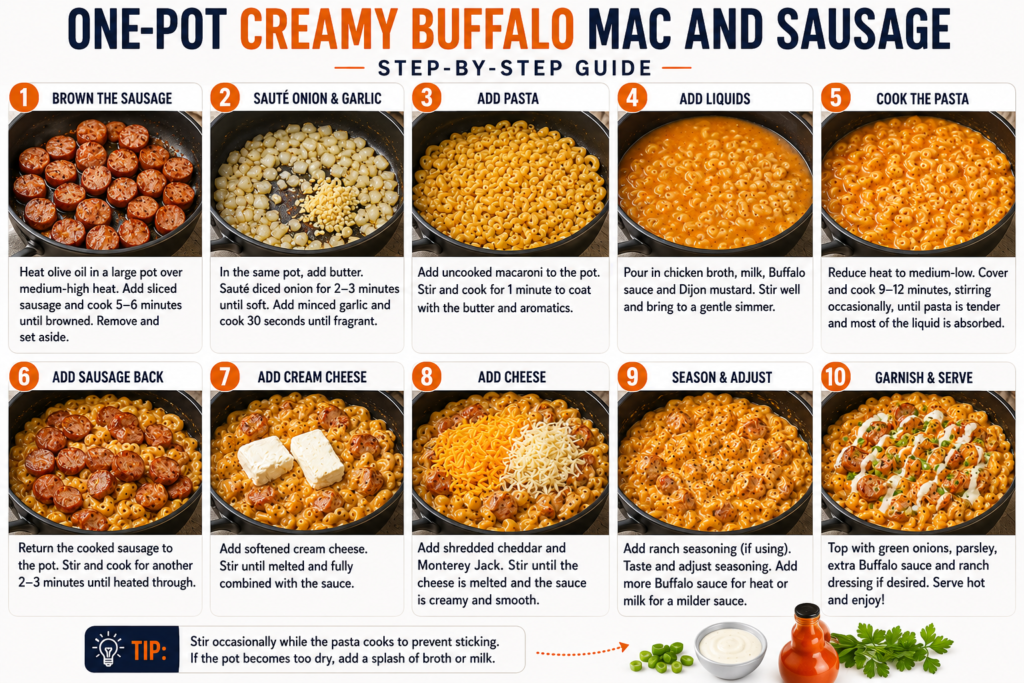
Step 1: Brown the Sausage
Heat the olive oil in a large, deep skillet or Dutch oven over medium-high heat.
Add the sliced sausage and sprinkle with smoked paprika, garlic powder, and black pepper.
Cook for approximately 5–6 minutes, turning occasionally, until the sausage is browned around the edges.
Transfer it to a plate and set aside.
The browned bits left in the skillet are valuable they add flavor to the sauce.
Step 2: Sauté the Onion and Garlic
Reduce the heat to medium.
Add butter to the same pot.
Once melted, add the diced onion and cook for 2–3 minutes until softened.
Add the minced garlic and cook for approximately 30 seconds.
Keep stirring so the garlic becomes fragrant without burning.
Step 3: Add the Pasta
Pour the uncooked macaroni directly into the skillet.
Stir it through the butter and aromatics for about 1 minute.
This helps coat the pasta in the flavorful base.
Step 4: Add the Cooking Liquid
Pour in the chicken broth and milk.
Add the Buffalo sauce and Dijon mustard.
Stir everything together.
Bring the mixture to a gentle simmer.
Step 5: Cook the Macaroni
Reduce the heat to medium-low.
Cover the skillet and cook for approximately 9–12 minutes.
Stir every few minutes to keep the pasta from settling and sticking to the bottom.
The macaroni should become tender while absorbing most of the liquid.
If it looks dry before the pasta is cooked, add a small splash of broth.
Step 6: Add the Sausage
Return the browned sausage to the skillet.
Stir to distribute it evenly.
Continue cooking for another 2–3 minutes so the sausage heats through and its smoky flavor blends into the sauce.
Step 7: Make It Creamy
Turn the heat to low or remove the skillet from the burner.
Add the softened cream cheese.
Stir until mostly melted.
Gradually add the shredded cheddar and Monterey Jack, stirring continuously until the cheese melts into a creamy sauce.
Add ranch seasoning if desired.
Step 8: Adjust the Buffalo Flavor
Taste the pasta.
If you want additional heat, stir in another spoonful of Buffalo sauce.
For a milder flavor, add a splash of milk or a little extra cream cheese.
Adjust the salt only after tasting because the sausage, cheese, broth, and Buffalo sauce can all contain sodium.
Step 9: Garnish and Serve
Top the finished mac and sausage with chopped green onions and parsley.
Add a drizzle of Buffalo sauce for extra flavor.
For a classic Buffalo-style finish, serve with ranch or blue cheese dressing on the side.
Serve hot.
Expert Tips
Brown the Sausage
Don’t simply add the sausage to the pasta without browning it first. Those golden edges provide a much deeper flavor.
Stir the Pasta Regularly
Because the macaroni cooks directly in the skillet, it can stick if left unattended.
Use Freshly Shredded Cheese
Pre-shredded cheese often contains anti-caking agents that can prevent it from melting smoothly.
Control the Heat
Once the cheese is added, avoid vigorous boiling. Excessive heat can cause the sauce to become oily or grainy.
Adjust the Buffalo Sauce Gradually
Different brands have different heat levels. Start conservatively and add more after tasting.
Don’t Overcook the Pasta
Macaroni continues to soften as it sits in the hot sauce. Stop cooking when it’s tender but still has a slight bite.
Let It Rest
Allow the finished dish to sit for 3–5 minutes before serving. The sauce will thicken and cling to the pasta.
Recipe Variations
Extra-Spicy Buffalo Mac
For serious heat, add:
- Cayenne pepper
- Crushed red pepper flakes
- Diced jalapeños
- Extra-hot Buffalo sauce
Buffalo Chicken Mac
Replace the sausage with diced chicken breast or shredded rotisserie chicken.
Bacon Buffalo Mac
Cook crispy bacon and crumble it over the finished pasta for a smoky, salty topping.
Buffalo Ranch Mac
Add ranch seasoning to the sauce and finish each serving with a small drizzle of ranch dressing.
Vegetable Buffalo Mac
Add vegetables such as:
- Broccoli
- Spinach
- Bell peppers
- Corn
- Cauliflower
Broccoli is particularly good with the spicy cheese sauce.
Three-Cheese Buffalo Mac
Use cheddar, Monterey Jack, and Pepper Jack for a richer and slightly spicy cheese blend.
What to Serve with Buffalo Mac and Sausage
Because this dish is rich and filling, fresh or crunchy sides work especially well.
Consider serving it with:
- Crisp green salad
- Celery sticks
- Carrot sticks
- Cucumber salad
- Coleslaw
- Roasted broccoli
- Steamed green beans
- Garlic bread
- Corn on the cob
Celery and carrots with ranch dressing are especially fitting because they echo the classic Buffalo flavor combination.
Storage & Reheating
Refrigerator
Transfer leftovers to an airtight container and refrigerate for up to 4 days.
Freezer
The finished dish can be frozen for up to 2 months, although the creamy sauce may change slightly in texture after thawing.
For best results, thaw overnight in the refrigerator.
Microwave
Place an individual serving in a microwave-safe bowl.
Add a splash of milk or chicken broth.
Heat in 30–60 second intervals, stirring between each interval until hot.
Stovetop
Reheat gently in a skillet over low heat.
Add a little milk or broth and stir frequently until the sauce becomes creamy again.
Common Mistakes to Avoid
Adding Too Much Buffalo Sauce
More sauce isn’t always better. Too much can overwhelm the cheese and make the dish excessively spicy or acidic.
Skipping the Sausage Browning
Browning creates the caramelized flavor that makes the sausage stand out.
Boiling After Adding Cheese
High heat can cause dairy-based sauces to separate.
Not Stirring the Pasta
Macaroni can stick to the skillet as it cooks, especially when the liquid level gets low.
Using Cold Cream Cheese
Softened cream cheese incorporates much more easily than a cold block straight from the refrigerator.
Overcooking
Remove the skillet from the heat when the pasta is just tender. Residual heat will continue cooking it.
FAQs
Is Buffalo mac and cheese very spicy?
It depends on the Buffalo sauce you use. Start with a moderate amount and increase it gradually. Ranch dressing or extra cheese can also soften the heat.
Can I use chicken instead of sausage?
Yes. Diced chicken breast, chicken thighs, or shredded rotisserie chicken are all good substitutions.
Can I use another type of pasta?
Absolutely. Cavatappi, shells, rotini, and small penne all work well.
Can I make this without ranch seasoning?
Yes. The ranch seasoning is optional. You can serve ranch dressing on the side instead.
What cheese melts best for this recipe?
Sharp cheddar and Monterey Jack make a particularly smooth combination. Pepper Jack is excellent if you want additional spice.
Can I make this recipe ahead?
Yes, although the pasta is creamiest when freshly made. When reheating, add milk or broth to loosen the sauce.
Can I add vegetables?
Definitely. Broccoli, spinach, bell peppers, cauliflower, and corn are all good options.
How can I make it less spicy?
Reduce the Buffalo sauce and replace some of it with additional milk or broth. Using mild Buffalo sauce and extra cheese will also reduce the heat.
Nutrition Information
Approximate values per serving, based on 6 servings:
- Calories: 590
- Protein: 25g
- Carbohydrates: 43g
- Fat: 35g
- Saturated Fat: 17g
- Fiber: 2g
- Sugar: 5g
- Cholesterol: 85mg
- Sodium: 1,050mg
- Calcium: 25% DV
Nutrition information is an estimate and can vary depending on the sausage, Buffalo sauce, cheese, broth, and other brands used.
Conclusion
One-Pot Creamy Buffalo Mac and Sausage is a bold and comforting twist on traditional macaroni and cheese. Smoky sausage, tender pasta, tangy Buffalo sauce, and a creamy combination of cheddar, Monterey Jack, and cream cheese create a satisfying skillet dinner that’s packed with flavor.
The one-pot method keeps the cooking process straightforward and makes cleanup much easier. You don’t need a separate pot for the pasta or a complicated cheese sauce—the macaroni cooks directly in the flavorful broth before the cheeses are folded in at the end.
It’s also easy to customize. Make it hotter with extra Buffalo sauce and jalapeños, add broccoli or spinach for vegetables, or swap the sausage for chicken if that’s what you have available. Serve it with crisp celery, carrots, a fresh salad, or roasted vegetables for a complete meal.
Whether you’re looking for a quick family dinner, an easy game-day recipe, or a comforting meal for a chilly evening, this creamy Buffalo mac delivers plenty of cheesy, spicy, smoky flavor with surprisingly little effort.