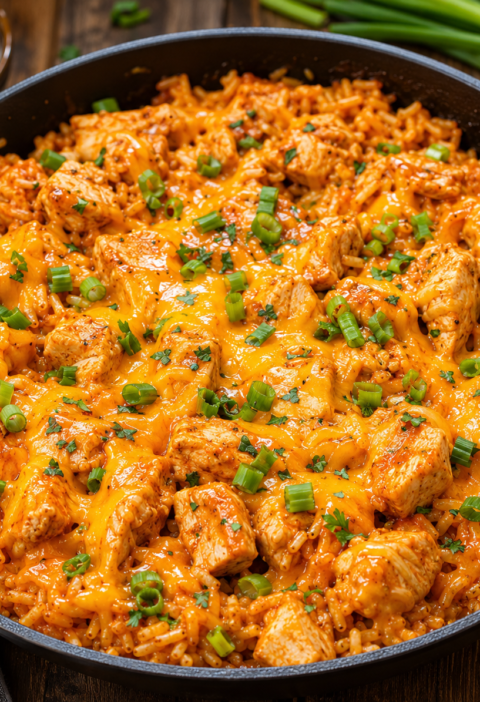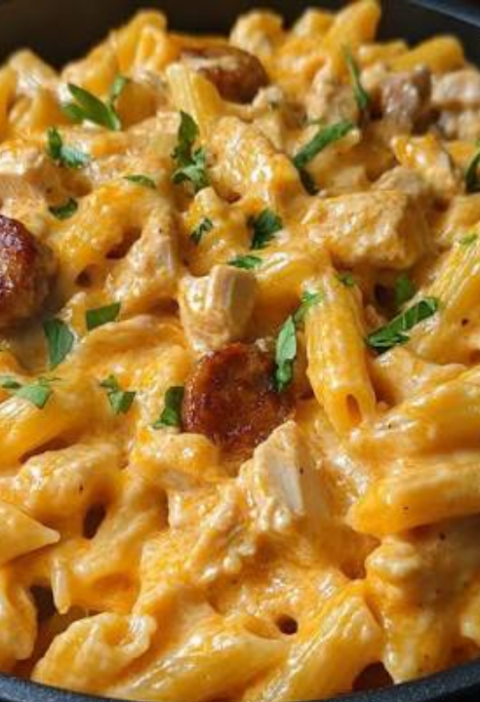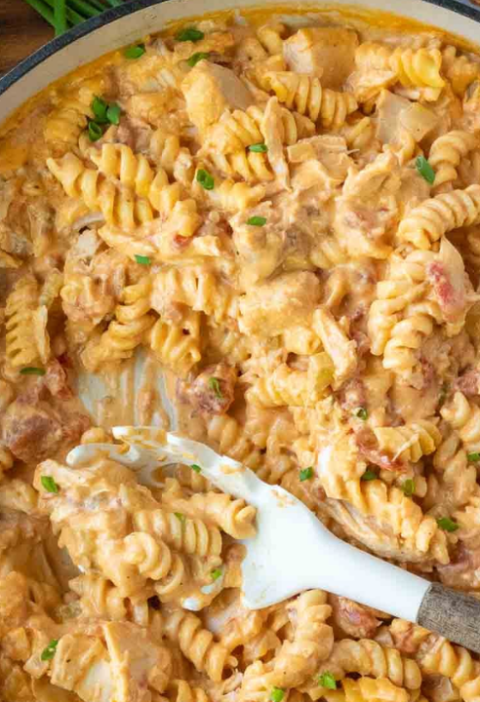
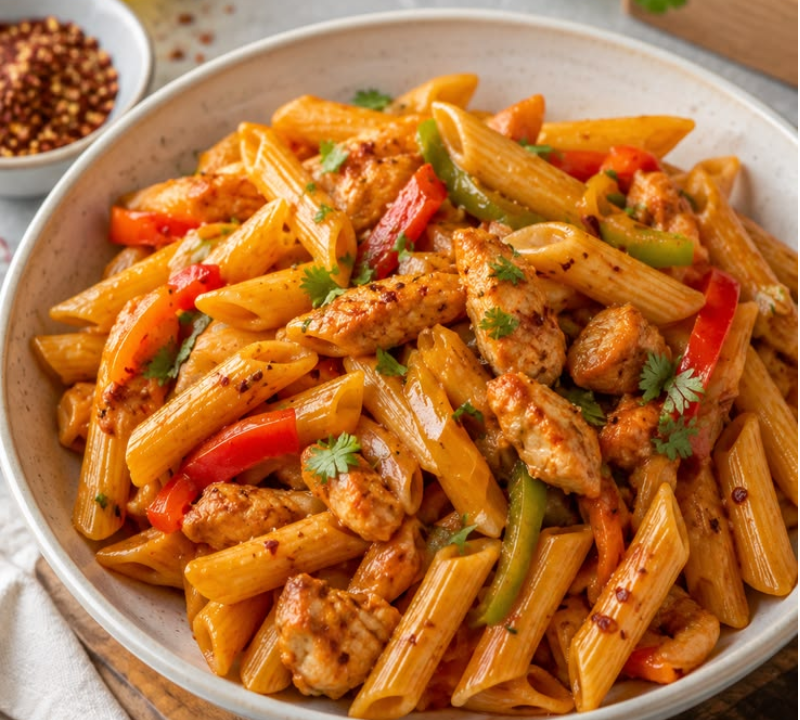
When you’re craving a dinner that’s creamy, cheesy, spicy, and packed with bold flavor, this Sticky Spicy Buffalo Ranch Pepper Jack Chicken Pasta is an excellent choice. Tender pieces of seasoned chicken are tossed with al dente penne, tangy Buffalo sauce, creamy ranch dressing, and melted Pepper Jack cheese.
The combination works because every ingredient brings something different to the skillet. Buffalo sauce contributes heat and acidity, ranch adds creamy tanginess, and Pepper Jack cheese provides richness with a gentle peppery kick. Garlic powder, black pepper, and optional cayenne give the chicken an extra layer of seasoning.
The original recipe is designed as a quick skillet meal with 25 minutes of total cooking time and four servings.
This updated version keeps the core flavor combination while expanding the cooking guidance, ingredient notes, substitutions, serving ideas, troubleshooting tips, and variations so you can easily make the recipe your own.
Whether you’re preparing a quick weeknight dinner, feeding hungry family members, or looking for a fun Buffalo-inspired meal for a casual gathering, this pasta is hearty, comforting, and surprisingly simple.
Why You’ll Love This Recipe
Ready in 25 Minutes
The recipe uses a straightforward cooking process, making it especially useful on busy evenings.
Big Buffalo Flavor
Buffalo sauce gives the pasta a tangy, spicy character that immediately makes the dish more exciting.
Creamy Ranch Finish
Ranch dressing softens the Buffalo sauce while adding a cool, savory creaminess.
Pepper Jack Cheese
Melted Pepper Jack makes the pasta rich and creamy while adding another layer of peppery heat.
Tender Seasoned Chicken
Diced chicken breast cooks quickly and distributes protein throughout every serving.
One-Skillet Sauce
After the pasta is cooked, the chicken and sauce come together in one skillet, keeping the process simple.
Easy to Adjust
You can easily make the dish milder, hotter, cheesier, or more vegetable-heavy.
Great for Leftovers
The finished pasta can be refrigerated, frozen, and reheated for another meal. The source recipe recommends refrigerating it for up to three days and freezing it for up to two months.
Ingredients
For the Pasta
- 8 ounces penne pasta
- Salt, for the pasta water
For the Chicken
- 1 pound boneless, skinless chicken breasts, diced
- 2 tablespoons olive oil
- 1 teaspoon garlic powder
- ½ teaspoon salt
- ½ teaspoon black pepper
- ¼ teaspoon cayenne pepper, optional
For the Buffalo Ranch Sauce
- 1 cup Buffalo sauce
- ½ cup ranch dressing
For the Cheese and Garnish
- 1 cup shredded Pepper Jack cheese
- ½ cup diced green onions
- Fresh cilantro, optional
- Crushed red pepper flakes, optional
The quantities are based on the source recipe, which lists penne, chicken breast, olive oil, Buffalo sauce, ranch dressing, Pepper Jack, green onions, and seasonings as the main ingredients.
Ingredient Notes
Penne
Penne is a great choice because the hollow center captures the Buffalo ranch sauce. Its ridges also help hold onto the creamy mixture.
Cook it just until al dente. The pasta will continue to soften slightly when tossed with the hot sauce.
Chicken Breast
Boneless, skinless chicken breast is convenient because it cooks quickly and has a mild flavor that allows the Buffalo ranch sauce to stand out.
Cut the chicken into evenly sized pieces so everything cooks at approximately the same rate.
Buffalo Sauce
Buffalo sauce provides the signature tangy heat. Since brands differ in saltiness and spiciness, taste your sauce before adding additional salt or cayenne.
Ranch Dressing
Ranch provides cooling creaminess and helps tame the sharpness of the Buffalo sauce.
A thicker ranch dressing generally creates a richer finished sauce.
Pepper Jack
Pepper Jack melts beautifully and contributes both creaminess and mild peppery heat.
For the smoothest texture, shred the cheese yourself if possible.
Green Onions
Green onions add freshness and a mild onion flavor that cuts through the richness of the cheese and ranch.
Cayenne
Cayenne is optional. The Buffalo sauce already supplies heat, so you don’t need it unless you want a spicier pasta.
Ingredient Substitutions
Chicken
Use boneless chicken thighs instead of chicken breast for a richer, juicier result.
Pasta
Penne can be replaced with:
- Rigatoni
- Rotini
- Ziti
- Fusilli
- Shells
- Cavatappi
Pepper Jack
If you want less heat, substitute Monterey Jack or mild cheddar. The original recipe also recommends these as alternatives.
Buffalo Sauce
Use a mild Buffalo sauce if you prefer less heat.
Ranch
Homemade ranch dressing can be used instead of bottled dressing.
Olive Oil
Avocado oil or another neutral cooking oil can replace olive oil.
Chicken Alternatives
Try:
- Turkey
- Cooked shredded chicken
- Rotisserie chicken
- Shrimp
- Smoked sausage
Step-by-Step Instructions
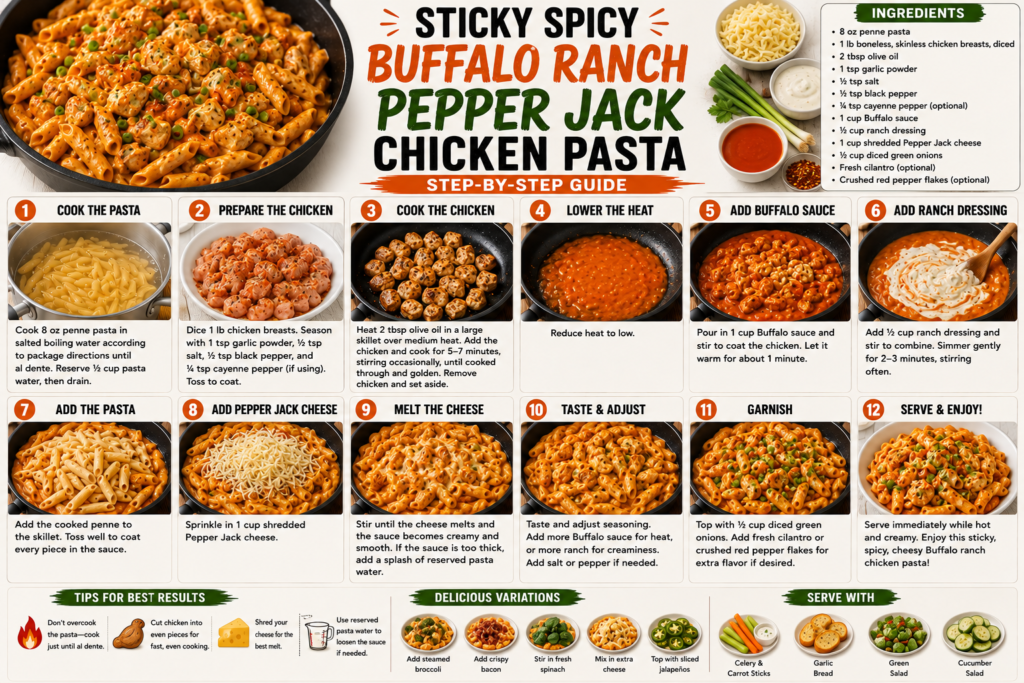
Step 1: Cook the Penne
Bring a large pot of salted water to a boil.
Add the penne and cook according to the package directions until al dente.
Before draining, reserve about ½ cup of pasta water.
Drain the pasta and set it aside.
Don’t rinse it. The natural starch on the pasta can help the sauce cling to the noodles.
Step 2: Prepare the Chicken
Pat the chicken dry with paper towels.
Cut it into small, evenly sized pieces.
Season with garlic powder, salt, black pepper, and cayenne if using.
Toss well so the seasoning coats the chicken evenly.
Step 3: Heat the Skillet
Place a large skillet over medium heat.
Add the olive oil and allow it to heat for a moment.
The oil should be hot enough to help the chicken brown without immediately smoking.
Step 4: Cook the Chicken
Add the seasoned chicken to the skillet.
Spread the pieces into a single layer as much as possible.
Cook for approximately 5–7 minutes, turning occasionally, until the chicken is browned and cooked through. This follows the cooking time given in the original recipe.
Avoid overcrowding the skillet. If necessary, cook the chicken in batches.
Step 5: Lower the Heat
Once the chicken is cooked, reduce the heat to low.
This prevents the Buffalo sauce and ranch from becoming too hot or separating when they’re added.
Step 6: Add Buffalo Sauce
Pour the Buffalo sauce into the skillet.
Stir gently so the sauce coats the chicken.
Allow it to warm for about a minute.
Step 7: Add Ranch Dressing
Add the ranch dressing.
Stir until the Buffalo sauce and ranch are thoroughly combined.
Let the mixture gently simmer for approximately 2–3 minutes, as directed in the source recipe.
Avoid vigorous boiling.
Step 8: Add the Penne
Transfer the cooked penne into the skillet.
Toss gently until the pasta is completely coated in the Buffalo ranch sauce.
If the sauce seems too thick, add a tablespoon or two of reserved pasta water.
Step 9: Add Pepper Jack
Sprinkle the shredded Pepper Jack over the pasta.
Stir gently until the cheese melts into the sauce.
The sauce should become creamy, glossy, and thick enough to coat the pasta.
Step 10: Taste and Adjust
Taste before adding more salt.
If you want additional heat, add cayenne, Buffalo sauce, or crushed red pepper flakes.
For a milder flavor, add a little more ranch.
Step 11: Garnish
Remove the skillet from the heat.
Scatter diced green onions over the top.
Add fresh cilantro or crushed red pepper flakes if desired.
Step 12: Serve
Serve the pasta immediately while the Pepper Jack is melted and the Buffalo ranch sauce is creamy.
For an especially indulgent presentation, finish each serving with a small drizzle of ranch and extra shredded cheese.
Expert Tips
Cook the Pasta Al Dente
Don’t overcook the penne. Slightly firm pasta holds up much better when tossed with a hot sauce.
Cut Chicken Evenly
Uniform pieces cook more consistently and help prevent some pieces from becoming dry while others remain undercooked.
Don’t Overcrowd the Skillet
Crowded chicken releases moisture and can steam instead of brown.
Lower the Heat Before Adding Ranch
Gentle heat helps preserve the creamy texture of the sauce.
Shred Your Own Cheese
Freshly shredded Pepper Jack generally melts more smoothly than pre-shredded cheese.
Reserve Pasta Water
A little starchy water can loosen the sauce and help it coat the pasta evenly.
Taste Before Adding Salt
Buffalo sauce, ranch, cheese, and seasoned chicken can all contribute salt.
Control the Heat Gradually
It’s easier to make the pasta spicier than to rescue a dish that’s become overwhelmingly hot.
Let It Rest Briefly
Allowing the finished pasta to sit for a couple of minutes lets the sauce settle and cling to the penne.
Recipe Variations
Creamy Buffalo Ranch Chicken Pasta
For an even richer version, add 2–4 tablespoons of cream cheese to the sauce before adding the pasta.
Extra-Cheesy Version
Mix Pepper Jack with cheddar or Monterey Jack for a deeper cheese flavor.
Buffalo Chicken Bacon Pasta
Add crispy cooked bacon for smoky, salty contrast.
Buffalo Ranch Chicken and Broccoli
Add steamed broccoli during the final tossing stage.
Buffalo Chicken Spinach Pasta
Stir fresh baby spinach into the hot sauce and allow it to wilt before serving.
Buffalo Chicken Corn Pasta
Sweet corn works especially well with the spicy sauce.
Spicy Buffalo Chicken Pasta
Use hot Buffalo sauce, Pepper Jack, cayenne, and crushed red pepper flakes.
Mild Buffalo Ranch Pasta
Use mild Buffalo sauce, skip cayenne, and increase the ranch slightly.
Buffalo Shrimp Pasta
Replace chicken with peeled shrimp. Cook the shrimp separately until opaque, then combine with the sauce and pasta.
Buffalo Sausage Pasta
Sliced smoked sausage makes a hearty alternative to chicken.
Ranch Cheddar Chicken Pasta
Replace some of the Pepper Jack with sharp cheddar for a milder, tangier cheese profile.
What to Serve With Buffalo Ranch Pepper Jack Chicken Pasta
Because this pasta is creamy, spicy, and rich, fresh and crunchy sides work especially well.
Celery Sticks
Classic celery provides crisp texture and helps cool the palate.
Cucumber Salad
A chilled cucumber salad offers refreshing contrast.
Caesar Salad
Crisp romaine and tangy dressing complement the rich pasta.
Coleslaw
Creamy or vinegar-based slaw provides cool crunch alongside the spicy sauce.
Garlic Bread
Warm garlic bread is perfect for catching the remaining Buffalo ranch sauce.
Roasted Vegetables
Try broccoli, zucchini, asparagus, or carrots.
Corn on the Cob
Sweet corn provides a pleasant contrast to the Buffalo heat.
Fruit Salad
A chilled fruit salad gives you a bright, refreshing finish.
Baked Potatoes
A fluffy baked potato can turn this into an especially hearty comfort-food meal.
Storage & Reheating
Refrigerator
Allow the pasta to cool before transferring it to an airtight container.
Refrigerate for up to 3 days, consistent with the source recipe.
Microwave
Place a serving in a microwave-safe bowl.
Add a small splash of water, milk, or broth.
Cover loosely and heat in 30–60-second intervals, stirring between each interval.
Stovetop
Place leftovers in a skillet over low to medium-low heat.
Add a splash of milk, broth, or water.
Stir frequently until hot.
Oven
For several portions, place the pasta in a covered oven-safe dish.
Heat at approximately 350°F (175°C) until warmed through. The source recipe recommends covering the pasta with foil and heating for about 20 minutes.
Freezer
The original recipe indicates that the pasta can be frozen for up to 2 months.
For better texture, thaw overnight in the refrigerator before reheating.
Common Mistakes to Avoid
Overcooking the Chicken
Chicken breast can become dry quickly. Cook until just done rather than leaving it in the skillet unnecessarily.
Overcooking the Pasta
Mushy pasta won’t hold the creamy sauce well.
Boiling the Buffalo Ranch Sauce
High heat can cause the creamy components to separate.
Adding Too Much Cayenne
Buffalo sauce already contains heat. Taste before adding extra cayenne.
Using Too Much Cheese
Pepper Jack thickens the sauce as it melts. Adding excessive cheese can make the pasta heavy and sticky.
Skipping the Garnish
Green onions provide a fresh contrast that helps balance the richness.
Forgetting Pasta Water
A little reserved pasta water can rescue a sauce that’s too thick.
Adding Salt Too Early
Taste after the Buffalo sauce, ranch, and cheese are incorporated.
Frequently Asked Questions
Is Buffalo Ranch Chicken Pasta very spicy?
The heat level depends primarily on the Buffalo sauce and whether you use cayenne. You can easily make it mild by choosing a mild sauce and skipping the cayenne.
Can I use chicken thighs?
Yes. Boneless, skinless chicken thighs are an excellent substitute and tend to remain particularly juicy.
Can I use rotisserie chicken?
Yes. Shredded cooked chicken can be stirred into the Buffalo ranch sauce. Since it’s already cooked, you only need to warm it through.
What cheese can replace Pepper Jack?
Monterey Jack or cheddar are good alternatives.
Can I make this recipe less spicy?
Absolutely. Use mild Buffalo sauce, skip the cayenne, and add extra ranch dressing if needed.
How can I make it spicier?
Use hot Buffalo sauce and add cayenne or crushed red pepper flakes.
Can I add vegetables?
Yes. Broccoli, spinach, corn, bell peppers, mushrooms, and zucchini all work well.
Can I use another pasta?
Definitely. Rigatoni, rotini, cavatappi, shells, and fusilli are all good choices.
Can I make it ahead?
Yes. Prepare the pasta, refrigerate it promptly, and reheat gently. The original recipe also notes that it works well for meal prep.
Why did my sauce become too thick?
The pasta absorbs sauce as it sits. Add a splash of milk, broth, or reserved pasta water while reheating.
Why did my cheese become clumpy?
The heat may have been too high. Pepper Jack should be melted gently into the warm sauce rather than exposed to aggressive boiling.
Can I use homemade ranch?
Yes. Homemade ranch can provide a fresher flavor and allows you to control the herbs and seasoning.
What is the best topping?
Green onions are the easiest choice. Blue cheese crumbles, cilantro, extra Pepper Jack, ranch drizzle, or crushed red pepper can also be delicious.
Nutrition Information
According to the source recipe, one cup contains approximately 520 calories, 32g protein, 51g carbohydrates, 22g fat, 3g fiber, and 990mg sodium.
Estimated nutrition per serving:
- Calories: 520
- Protein: 32g
- Carbohydrates: 51g
- Fat: 22g
- Saturated Fat: 7g
- Fiber: 3g
- Sugar: 5g
- Sodium: 990mg
- Cholesterol: 85mg
Nutrition values are estimates and can vary depending on the specific brands and quantities of Buffalo sauce, ranch dressing, cheese, pasta, and chicken used.
Conclusion
Sticky Spicy Buffalo Ranch Pepper Jack Chicken Pasta is the kind of dinner that proves a quick recipe doesn’t have to sacrifice flavor. In just about 25 minutes, you can turn simple ingredients into a creamy, cheesy skillet meal loaded with spicy Buffalo flavor and savory chicken.
The combination of Buffalo sauce and ranch creates the foundation of the dish, while Pepper Jack cheese gives the pasta a rich, silky texture with a gentle kick. Seasoned chicken makes it satisfying enough for a complete dinner, and green onions add a fresh finishing touch.
For the best results, cook the penne until al dente, brown the chicken without overcrowding the skillet, and keep the Buffalo ranch mixture at a gentle temperature. Add the cheese gradually so it melts smoothly into the sauce.
The recipe is also incredibly flexible. Make it hotter with cayenne and extra Buffalo sauce, mellow it with additional ranch, or add broccoli, spinach, corn, or bell peppers for extra vegetables. You can even swap the chicken for shrimp, sausage, or another favorite protein.
Serve it with crisp celery, cucumber salad, coleslaw, roasted vegetables, or warm garlic bread. For a classic Buffalo-inspired presentation, add extra green onions and a drizzle of ranch just before serving.
With its creamy texture, spicy Buffalo flavor, Pepper Jack richness, and quick preparation, this pasta is an easy addition to any weeknight dinner rotation.