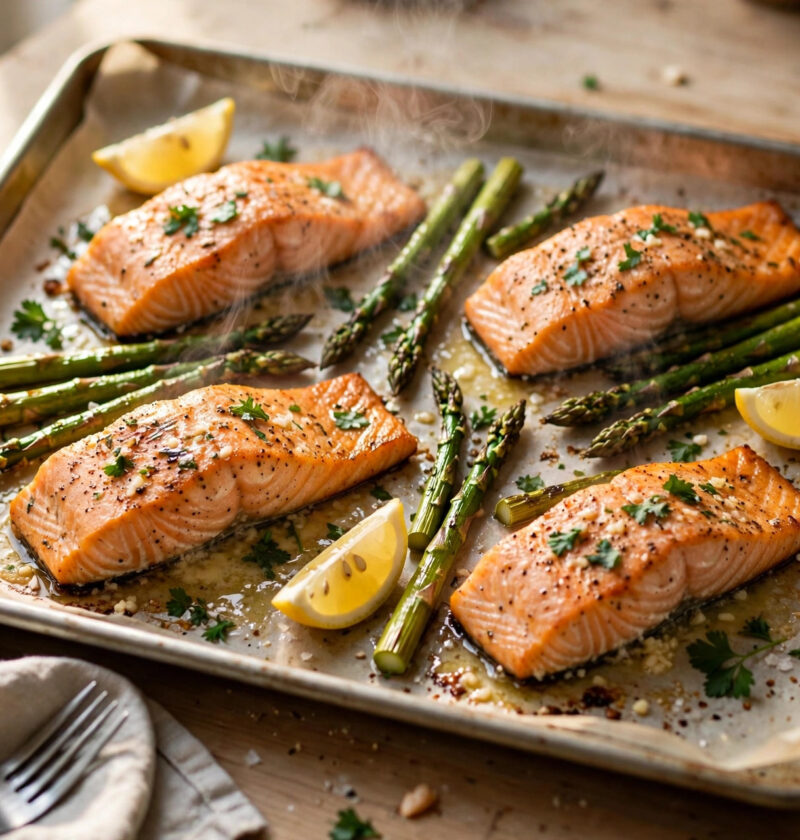
There is a special kind of weeknight magic in a dinner that cooks itself on a single pan. This sheet pan garlic butter salmon and asparagus is exactly that: juicy, flaky salmon fillets and crisp-tender asparagus spears, roasted together under a shower of sizzling garlic butter, bright lemon, and fresh herbs. Everything lands on one rimmed sheet pan, everything comes out of the oven in about 15 minutes, and everything tastes like you planned it for hours.
The garlic butter is the whole secret. It melts over the salmon as it roasts, basting the fillets from above so they stay impossibly moist, while the asparagus underneath soaks up every dripping, caramelized edge. A final squeeze of lemon and a shower of fresh parsley cut through the richness, and suddenly a Tuesday night feels like a restaurant table. No marinating, no babysitting, no pile of dishes — just one pan, real ingredients, and dinner on the table in 25 minutes flat.
Why You’ll Love This Recipe
- One pan, zero drama: The salmon and asparagus cook side by side on a single sheet pan, so there’s exactly one thing to wash and nothing to coordinate. This is as close to set-and-forget as a real home-cooked dinner gets.
- Garlic butter does double duty: It bastes the salmon as it roasts for maximum juiciness, and the drippings flavor the asparagus into something your family will actually fight over.
- Done in 25 minutes: 10 minutes of hands-on prep, 12–15 minutes in the oven. It’s genuinely faster than ordering takeout — and it tastes nothing like a shortcut.
- Naturally healthy and gluten-free: High in protein, packed with omega-3s, fiber, and vitamins, with no heavy sauces or breading. This is clean eating that doesn’t feel like a compromise.
- Endlessly flexible: Swap the asparagus for green beans or broccoli, add cherry tomatoes for a burst of sweetness, or change up the herbs. The formula works with whatever looks good at the market.
Tools You’ll Need
- Large rimmed sheet pan (18×13-inch half sheet works best)
- Parchment paper or a silicone baking mat
- Small microwave-safe bowl for melting the butter
- Paper towels (for patting the salmon dry)
- Fish spatula or thin metal spatula
- Zester or microplane for the lemon
- Instant-read thermometer (optional but recommended)
Ingredients
For the Salmon
- 4 salmon fillets (about 6 oz / 170 g each), skin-on or skinless
- 1 teaspoon kosher salt
- 1/2 teaspoon freshly cracked black pepper
- 1/2 teaspoon garlic powder
- 1/2 teaspoon paprika (sweet or smoked)
- 1 tablespoon olive oil
For the Garlic Butter
- 6 tablespoons unsalted butter, melted
- 5 cloves garlic, minced (about 1 1/2 tablespoons)
- 1 tablespoon fresh lemon juice, plus lemon wedges for serving
- 1 teaspoon lemon zest
- 1 teaspoon Italian seasoning
- 1/2 teaspoon Dijon mustard
- 1/4 teaspoon red pepper flakes (optional)
For the Asparagus
- 1 1/2 pounds fresh asparagus, tough ends trimmed
- 1 tablespoon olive oil
- 1/2 teaspoon kosher salt
- 1/4 teaspoon freshly cracked black pepper
- 2 tablespoons freshly grated Parmesan cheese (optional, for finishing)
- 2 tablespoons chopped fresh parsley, for garnish
How to Make Sheet Pan Garlic Butter Salmon and Asparagus
Step 1: Heat the oven and prep the pan
Position a rack in the center of the oven and preheat to 425°F (220°C). A hot oven is the whole point of a sheet pan dinner — it’s what gives the asparagus those caramelized, crispy-tipped edges and keeps the salmon’s exterior from steaming. Line a large rimmed sheet pan with parchment paper for easy cleanup (the garlic butter drippings WILL stick, and you’ll be grateful later). While the oven heats, take the salmon out of the fridge so it loses its chill — cold fish hits hot heat and seizes, warm-starting fish cooks more evenly.
Step 2: Make the garlic butter
In a small bowl, whisk together the melted butter, minced garlic, lemon juice, lemon zest, Italian seasoning, Dijon mustard, and red pepper flakes (if using). The Dijon is a quiet powerhouse here: it emulsifies the butter slightly so it clings to the salmon instead of pooling, and it adds a subtle tangy backbone that makes the garlic taste even more garlicky. Taste a drop on your fingertip — it should be boldly savory, bright from the lemon, and smell like the best kind of trouble. Set it aside.
Step 3: Season the salmon
Pat the salmon fillets very dry on both sides with paper towels. This step is non-negotiable: surface moisture is the enemy of browning, and a dry fillet roasts into a lightly crisped, golden top instead of a steamed, pale one. Rub each fillet with a little olive oil, then season generously with the salt, pepper, garlic powder, and paprika. The paprika doesn’t just add flavor — it gives the finished salmon that gorgeous, appetizing reddish-gold color. Place the fillets skin-side down (if they have skin) on one side of the prepared sheet pan, leaving a few inches between them so hot air can circulate.
Step 4: Prep the asparagus
Snap or trim the tough woody ends off the asparagus — bend a spear near the bottom and it will break naturally at the point where the tender part begins; use the first spear as a guide for the rest. Lay the asparagus in a single layer on the other side of the sheet pan. Drizzle with the olive oil, sprinkle with salt and pepper, and toss with your hands so every spear is lightly coated. A single uncrowded layer is critical: piled-up asparagus steams, and steamed asparagus is floppy and gray-green. Single layer gives you crisp-tender spears with caramelized tips. If your pan is crowded, use a second pan rather than piling.
Step 5: Butter everything
Spoon about two-thirds of the garlic butter over the salmon fillets, letting it run down the sides and pool slightly around them — this is the basting liquid that keeps the fish juicy. Drizzle the remaining third over the asparagus and toss the spears once more to coat. Reserve a spoonful of garlic butter in the bowl if you like serving a little extra drizzled over the finished plates. Your pan should now look like a promise: pink-seasoned salmon, green-glistening asparagus, golden pools of garlic butter everywhere.
Step 6: Roast
Slide the pan into the hot oven and roast for 12–15 minutes, depending on the thickness of your fillets. The salmon is done when it flakes easily with a fork and the thickest part registers 130–135°F (54–57°C) on an instant-read thermometer for medium — carryover heat will bring it to a perfect 140–145°F as it rests. The asparagus should be bright green, tender at the stalk, and slightly crisped and browned at the tips. If your asparagus spears are very thin, they may finish a minute or two before the salmon — just pull them to the edge of the pan with tongs or onto a plate and let the fish finish.
Step 7: Finish and serve
Pull the pan from the oven and let the salmon rest right on the pan for 3–4 minutes — this lets the juices redistribute so the fillets stay moist when you cut in. Scatter the Parmesan over the asparagus (if using) while it’s still hot so it melts into salty, crispy bits. Shower everything with fresh parsley, add a final squeeze of lemon over the salmon, and serve straight from the pan or plate it up over rice, quinoa, or crusty bread to catch the garlic-butter drippings. Don’t leave a drop behind.
Tips for the Best Results
- Pat the salmon bone-dry. It’s the single biggest factor between a golden, lightly crisped top and a pale, steamy one. Paper towels, both sides, don’t rush it.
- Use center-cut fillets of even thickness. Thin tail pieces overcook while thick centers are still translucent. If your fillets vary, tuck the thin ends under themselves to even them out.
- Fresh garlic only. Jarred minced garlic has a flat, slightly acidic bite that can’t stand up to roasting. Five fresh cloves, minced fine, make this dish what it is.
- Don’t walk away at the end. Salmon goes from perfect to overdone in about 90 seconds. Start checking at 12 minutes — the fish should still look slightly translucent in the very center when you pull it, because carryover heat finishes the job.
- Trim asparagus the smart way. Snap one spear to find the natural break point, line up the rest, and chop once. It’s faster than trimming individually and guarantees no woody bites.
- The thermometer is worth it. Salmon doneness by look alone is a gamble; a $12 instant-read thermometer takes the guessing out and is the difference between moist and chalky, every single time.
Mistakes to Avoid
- Crowding the pan. This is sheet pan mistake number one. Overlapping salmon and piled asparagus trap steam, and steam is the enemy of caramelization. Give everything breathing room, or grab a second pan.
- Roasting at too low a temperature. 425°F is deliberate. Lower heat slowly bakes the fish without browning and turns the asparagus limp before it crisps. The blast of high heat is what makes this recipe work.
- Adding the lemon zest too early in the butter. Actually — zest goes into the butter BEFORE roasting here, and that’s intentional: the fat captures the citrus oils. But don’t add extra lemon juice before roasting beyond the tablespoon; too much acid on the fish pre-cook can start “cooking” it ceviche-style and turn the texture mushy.
- Cooking the salmon to 145°F in the oven. By the time it rests, it’s 150°F+ and dry. Pull it at 130–135°F and trust carryover heat. The USDA’s 145°F is a food-safety endpoint, not a pull temperature — carryover gets you there.
- Skipping the rest. Cutting into salmon straight from the oven lets all the juices run out onto the plate instead of staying in the fish. Three to four minutes. That’s it. Use the time to squeeze the lemon and grab the bread.
Serving Suggestions
- Fluffy jasmine rice or lemon-herb couscous — both soak up the garlic-butter pan drippings beautifully and turn this into a complete, satisfying meal.
- Crusty sourdough or warm baguette — for dragging through the buttery pan sauce. Non-negotiable if you ask me; the drippings are liquid gold.
- A simple arugula salad — peppery arugula, shaved Parmesan, lemon vinaigrette. The fresh bitterness balances the rich butter perfectly.
- Roasted baby potatoes — toss halved baby potatoes with olive oil and roast them on the pan for 20 minutes BEFORE adding the salmon and asparagus, for a true one-pan feast.
- Chilled Sauvignon Blanc or Pinot Grigio — bright, citrusy whites that echo the lemon in the dish without overpowering the delicate salmon.
Storage and Reheating
Refrigerator: Store leftover salmon and asparagus in an airtight container for up to 3 days. Keep the salmon and asparagus together or separate — either is fine, but a piece of parchment between stacked fillets prevents sticking.
Freezer: Cooked salmon freezes better than you’d expect. Wrap individual fillets tightly in plastic wrap, then foil, and freeze for up to 2 months. Asparagus doesn’t freeze well after roasting (it goes mushy), so freeze the salmon only and roast fresh asparagus when serving.
Reheating: The oven is your friend: warm leftovers at 300°F (150°C) for 10–12 minutes until heated through. The microwave works but go low and slow — 50% power in 30-second bursts — because high heat turns leftover salmon rubbery in seconds. A squeeze of fresh lemon after reheating wakes everything back up.
Frequently Asked Questions
Can I use frozen salmon?
Yes, with one important step: thaw it completely first. Thaw frozen fillets overnight in the fridge, or in a sealed bag under cold running water for about 30 minutes. Never roast from frozen here — the outside overcooks while the center stays icy, and the excess moisture ruins the browning. Pat extra-dry after thawing.
What if my asparagus spears are very thick or very thin?
Adjust, don’t stress. Pencil-thin spears roast in 8–10 minutes — add them to the pan 3–4 minutes after the salmon goes in. Extra-thick spears may need the full 15 minutes or a quick peel of the lower stalk with a vegetable peeler. When in doubt, pull the asparagus when it’s bright green and tender-crisp; it keeps cooking on the hot pan.
Can I make this dairy-free?
Absolutely. Swap the butter for a good olive oil or a dairy-free butter alternative, and skip the Parmesan finish. You’ll lose a little of the richness, but the garlic, lemon, and herbs still carry the dish. Add an extra clove of garlic to compensate.
How do I know the salmon is done without a thermometer?
Press the thickest part gently with a fork and twist — if it flakes into clean layers and the flesh is opaque with just a whisper of translucency in the very center, it’s done. If it resists flaking or looks glassy and raw inside, give it 2 more minutes. When in doubt, the thermometer is still the safest bet.
Can I add other vegetables to the pan?
Yes — cherry tomatoes, sliced zucchini, and thin green beans all work. The rule: everything needs to finish in 12–15 minutes at 425°F. Hard vegetables like carrots or potatoes need a head start (roast them 15–20 minutes alone first). Cherry tomatoes are the easiest add — they burst into sweet, jammy pockets that love the garlic butter.
Recipe Card Data
- Prep Time: 10 minutes
- Cook Time: 15 minutes
- Total Time: 25 minutes
- Servings: 4
- Calories: ~485 per serving
- Course: Main Dish
- Cuisine: American
- Method: Sheet Pan / Roasted